US importers evaluating over the counter pain patches from Chinese OEMs often focus on price and minimum order quantity. Compliance risk is the bigger hurdle. This guide explains the active-ingredient limits, Drug Facts labeling requirements, warning text, and manufacturing checks you must verify before ordering a private-label run.
OTC Pain Patch Categories and Active Ingredient Limits for the US Market
Over the counter pain patches are adhesive patches that deliver a pain-relieving active ingredient through the skin. In the US, they are regulated as OTC drugs under the FDA monograph system, not as cosmetics or simple medical devices. The three most common active ingredients are lidocaine, menthol, and capsaicin.
Lidocaine is a topical anesthetic. The maximum OTC strength allowed in a US pain patch is 4% lidocaine. Products must state “Topical analgesic” on the Drug Facts panel. Lidocaine 4% patches are labeled for adults and children 12 years and older. Directions typically state: apply one pouch to the affected area not more than 3 to 4 times daily, remove after at most 12 hours, and do not reuse.
Menthol and capsaicin are counterirritants. Menthol produces a cooling sensation; capsaicin produces a warming sensation. Both are used for temporary relief of minor muscle soreness or mild joint pain. Capsaicin transdermal patches are commonly used for minor pain in muscles and joints caused by arthritis, backaches, muscle strains, and bruises. OTC pain patches in general are intended for localized musculoskeletal pain, such as minor joint pain, muscle strains, and arthritis.
Hydrogel patches can be marketed for 12-hour wear. Some US retail shelves carry arthritis pain relief patches in multiple sizes and price points; the per-count retail price is one reference price from a mass-market retailer, but your target may differ. For a format comparison, see our guide on Black Plaster vs Cataplasm vs Hydrogel: Choosing a Pain Relief Patch Format.
Required Drug Facts Labeling: What Importers Must Verify
Unlike in some other markets, the US requires a specific “Drug Facts” format on the outer carton of any OTC drug, including pain patches. Importers must verify that the label includes:
- Active ingredient and strength (e.g., Lidocaine 4%)
- Purpose (e.g., Topical analgesic)
- Uses (e.g., temporarily relieves minor pain)
- Warnings (see next section)
- Directions (application frequency, wear time, age limits)
- Inactive ingredients
- Net quantity of contents
- Lot number and expiration date
For a 4% lidocaine patch, the active ingredient must be listed as “Lidocaine 4%” and the purpose as “Topical analgesic.” The directions must limit use to adults and children 12 years and older. Do not assume a supplier’s existing artwork meets US requirements; ask for a digital proof and compare against the current FDA OTC monograph for external analgesics.
Warnings and Directions That Must Appear on Pack Inserts
The FDA monograph for topical analgesics/ anesthetics requires specific warning language on both the outer package and any pack insert. For a 4% lidocaine OTC patch, required warnings include:
- External use only
- Do not use on wounds, damaged skin, raw surfaces, or blistered areas
- Do not use with a heating pad
- Avoid contact with eyes or mucous membranes
- Do not bandage tightly
- Stop use and ask a doctor if condition worsens or persists more than 7 days, or if excessive skin irritation occurs
Directions must state the maximum frequency and wear time. A typical direction is: “Adults and children 12 years and older: apply one pouch to the affected area not more than 3 to 4 times daily. Remove after at most 12 hours. Do not reuse.” Importers should request a copy of the exact insert text from the factory and have it reviewed by a US labeling consultant. Minor wording changes can trigger an import hold at the border.
Inactive Ingredients and Adhesion Technology: What Wholesale Buyers Should Check
Inactive ingredients affect skin tolerance, adhesion, and wear time. A typical 4% lidocaine hydrogel patch may list inactive ingredients such as polymers, humectants, preservatives, and pH adjusters; the exact list varies by factory. This list is not universal; formulations vary by factory. Buyers should request the full inactive ingredient list and evaluate it for common irritants or allergens.
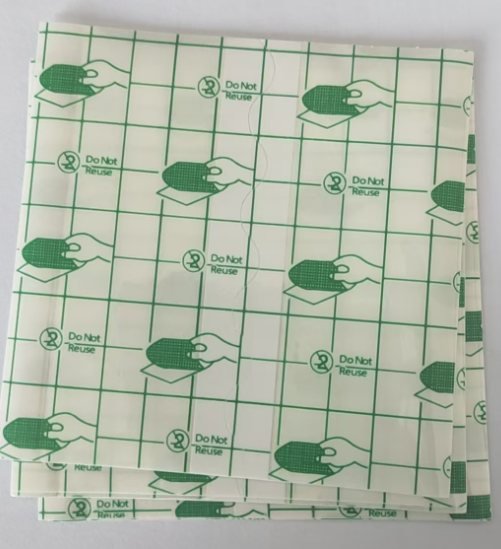
Adhesion is a key quality parameter for any pain patch. A patch that falls off before the labeled wear time creates returns and complaints. Ask the manufacturer for adhesion test data, such as peel force and shear resistance, and for skin irritation test results. Automated coating and lamination lines reduce variability. Hubei Nuozhongsheng’s plant has class-100,000 clean rooms, a sterile lab, and automated lines suited for consistent adhesive patch production. Cleanroom control helps avoid particulate contamination that can cause skin reactions.
Private-Label and OEM Sourcing: Documentation and Factory Audits
When sourcing from a Chinese OEM, documentation is as important as the sample patches. You should require:
- FDA Drug Facts label proof (or a compliance letter from a US regulatory consultant)
- Batch manufacturing records
- Stability test data supporting the expiration date
- Incoming raw material certificates of analysis
- Finished product QC release specifications
Factory audits should verify the clean room classification, production line automation, and quality management system. Hubei Nuozhongsheng holds ISO 9001 and Intertek factory audit certifications. OEM service is available from 100 sets; private label from 2,000 sets. This allows buyers to run small pilot batches before scaling. For a step-by-step sourcing process, see our article on How to Source OEM Pain Relief Patches from China: MOQ, Samples and Documents. For a parallel private-label category with similar documentation needs, our Private-Label Seawater Nasal Spray guide shows how we handle label and QC verification for other products.
Common Compliance Pitfalls When Importing OTC Patches to the US
- Making disease treatment claims. OTC pain patches may only use monograph-approved language like “temporarily relieves minor aches and pains.” Any claim to treat arthritis, nerve pain, or chronic conditions will classify the product as an unapproved new drug.
- Using an active ingredient strength above the OTC monograph limit. For lidocaine, 4% is the maximum. A 5% lidocaine patch is prescription only in the US.
- Missing the “Drug Facts” format. The label must follow the exact layout, font size, and order specified by FDA. A supplier’s EU or Asia label will not pass.
- Unapproved active ingredients. Herbal or TCM ingredients often do not appear in a US OTC monograph. Such patches may be registered in China under a traditional use category, but buyers must check US registration requirements separately. For those considering herbal patch formats, our Children’s Herbal Navel Patches guide covers some of the format and compliance points that also apply to adult herbal patches.
- Poor adhesion or short wear time. Many buyers report that low-cost patches fall off early. Specify a minimum wear time in your QC spec and test on multiple skin types.
Checklist for Approving a Chinese Patch Manufacturer
- Verify the active ingredient strength matches the US OTC monograph (e.g., lidocaine 4% max).
- Request a sample of the proposed Drug Facts label and compare to FDA requirements.
- Confirm warning text and directions are complete and exact.
- Ask for the full inactive ingredient list and check for irritants.
- Require adhesion test data and a wear-time claim supported by internal testing.
- Check the factory’s clean room class and whether it matches your product’s needs (class-100,000 is typical for non-sterile transdermal patches).
- Confirm ISO 9001 or equivalent QMS, and ask for a recent third-party factory audit.
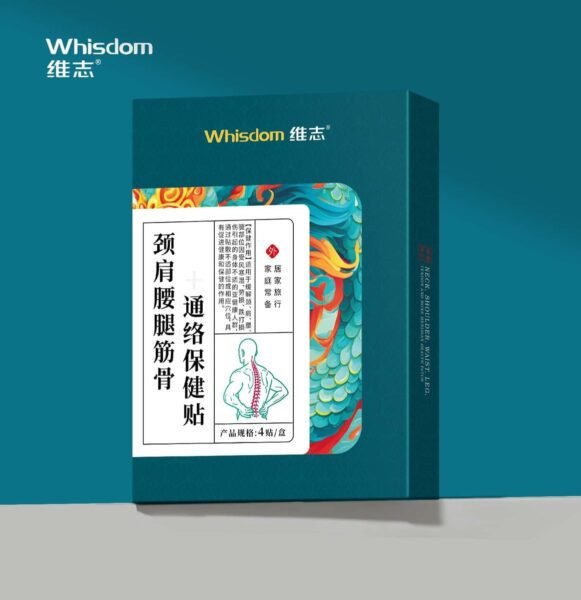
- Verify MOQ and private-label terms. Hubei Nuozhongsheng offers OEM from 100 sets and private label from 2,000 sets, with brands Nuozhongsheng, Whisdom, and Nuozosen available.
- Obtain a full batch record from the most recent production run.
- Request a small pilot order and test the patches for adhesion, irritation, and label compliance before committing to large volumes.
FAQ
What is the strongest over-the-counter pain patch?
In the US, the strongest OTC lidocaine patch is 4% lidocaine. Higher strengths, such as 5% lidocaine, require a prescription. Capsaicin patches at monograph strengths are also available, but “strongest” depends on the type of pain and the active ingredient. No OTC patch is intended for severe or chronic pain.
Which pain relief patch is the best?
There is no single best pain patch. Lidocaine patches are often chosen for targeted numbing of minor muscle and joint pain. Menthol and capsaicin patches provide counterirritant sensations. The best patch for a specific buyer depends on the active ingredient, wear time, adhesion, and user preference. For importers, the best patch is the one that passes US label compliance and skin tolerance testing.
Are there any pain patches that really work?
Many users report relief from minor aches and pains with lidocaine, menthol, or capsaicin patches. These actives are recognized in the FDA OTC monograph for temporary relief. However, results vary by person and condition, and patches are not a substitute for medical treatment.
What pain patches do doctors prescribe?
Doctors may prescribe higher-strength lidocaine patches (5%) for certain localized nerve pain conditions. These are not available OTC. For OTC use, doctors may recommend 4% lidocaine or menthol patches for minor muscle strains or joint pain, based on the individual’s needs.